Benidorm is warm for most of the year, so you pick the month to suit the trip rather than the thermometer. A fortnight on the sand with children and three months of working from a terrace point to different parts of the calendar.
When is the best time to visit Benidorm?
It depends on what you are coming for. Swimming and a full beach holiday means June to September. Warmth without the crowds means May or September. And sightseeing, walking or a longer stay means the rest of the year, October to April, when daytime highs sit between 17°C and 25°C and flights are at their cheapest.
That split comes from the figures, not from impressions. The Costa Blanca sits in a semi-arid Mediterranean belt, and Benidorm occupies a bowl sheltered from the north by the Sierra Helada and Puig Campana. Winter is milder here than inland, and the sea breeze takes the edge off summer.
- Beach holiday with children - July and August. Hottest, almost no rain, busiest and priciest.
- Warmth without the crowds - May, late June and September. The best ratio of weather to cost.
- Sightseeing and walking - April and October, at 21°C to 25°C.
- Quiet, sun and low costs - November to March. No swimming, but an empty promenade.
What is the weather in Benidorm like month by month?
Daytime highs run from 16.8°C in January to 30.8°C in August, and nights from 6.7°C to 22.0°C. Sunshine averages 5.5 hours a day in December and 11 hours in July. Rainfall totals 266 mm across the year, spread over fewer than 33 days with measurable rain.
The table below holds the official climate normals published by AEMET, the Spanish state meteorological agency, for 1991-2020, the reference period in force since 2023. Thirty-year averages from instruments, not a forecast.
| Month | Day | Night | Rainfall | Rain days | Sun per day |
|---|---|---|---|---|---|
| January | 16.8 | 6.7 | 25.1 mm | 3.3 | 6.0 h |
| February | 17.4 | 7.1 | 16.9 mm | 2.7 | 6.5 h |
| March | 19.4 | 8.8 | 24.5 mm | 3.6 | 7.2 h |
| April | 21.3 | 11.1 | 29.0 mm | 3.5 | 8.3 h |
| May | 24.2 | 14.4 | 19.7 mm | 2.6 | 9.3 h |
| June | 27.9 | 18.3 | 8.3 mm | 1.2 | 10.6 h |
| July | 30.2 | 21.3 | 2.6 mm | 0.5 | 11.0 h |
| August | 30.8 | 22.0 | 10.2 mm | 1.1 | 10.0 h |
| September | 28.3 | 19.2 | 40.7 mm | 3.2 | 8.1 h |
| October | 24.8 | 15.1 | 33.4 mm | 3.9 | 7.0 h |
| November | 20.2 | 10.5 | 30.3 mm | 3.8 | 5.9 h |
| December | 17.4 | 7.6 | 25.7 mm | 3.4 | 5.5 h |
Degrees Celsius. Day is the mean daily maximum, night the mean daily minimum, rain days counted at 1 mm or more. Normals for 1991-2020, AEMET station at Alicante-Elche, 50 km south. Source: AEMET OpenData, Climate normals 1991-2020.
Across the year that is 266 mm of rain and an average of 8.0 hours of sunshine a day. The second figure, not the heat, is why December here feels nothing like December at home.
When is Benidorm warm but not crowded?
May and September are the two months that get you both. May delivers 24.2°C by day and 9.3 hours of sunshine at pre-season prices. September still holds 28.3°C, with a sea warmed by a full summer at 24.8°C, and the beaches thin out once the Spanish school holidays finish at the start of the month.
May is the month people underrate. It sounds like spring and behaves like early summer: 14.4°C at night means dinner on the terrace without a jumper. The Ruta La Cruz walk up the Sierra Helada, about 5 km there and back with 237 m of ascent, is a different proposition at 24°C than at 30°C. So is the run inland to Guadalest, 21 km away and 45 minutes by coach, which we cover in the guide to day trips from Benidorm.
September works the other way round. It is summer that has slowed down: the water has spent three months absorbing heat while the crowds have gone home.
Late June is the third option: 27.9°C, 1.2 days of rain in the whole month, and rates that have not yet caught up with the school holidays.
Is Benidorm worth visiting in winter?
Yes, provided you are going for sunshine and walking rather than swimming. January averages 16.8°C by day with six hours of sunshine. The town does not close out of season: shops, restaurants and bars stay open, the patron saint festivals fall in November and the Benidorm Fest song contest in February.
Winter Benidorm is a different town from the July version, and that is the point of it. The promenade belongs to people walking rather than queueing, and you can cover three kilometres of Poniente passing a handful of people. Keep it in proportion: nights drop to around 7°C and evenings happen indoors. November is the exception to the quiet. The patron saint festivals start on the second Saturday of the month and run to the following Wednesday, with a re-enactment on Poniente beach, parades through the streets and fireworks to finish.
It is also the cheapest stretch of the year, which is why the winter months draw a long-established British community to this coast. A British passport now brings the 90 days in 180 Schengen limit into the planning, so if you are thinking in months rather than weeks, read our piece on wintering on the Costa Blanca first.
Benidorm in November
20.2°C by day and 10.5°C at night, with 5.9 hours of sun a day. It rains on fewer than four days, but when it does it comes down hard: 30.3 mm across the month. The sea is down to 18.9°C, too cold for most people to swim.
Benidorm in December
17.4°C by day and 7.6°C at night, with 5.5 hours of sun a day, the lowest average of the year. The light goes early here, so you get your walking done before four. It rains on 3.4 days, 25.7 mm in total. The town does Christmas and New Year properly.
Benidorm in January
The coldest month: 16.8°C by day, 6.7°C at night, with the sea down to 14.8°C. Sunshine is already back to six hours a day and rain is rare, 3.3 days in the month, which makes the middle of the day better for walking than the monthly averages suggest.
Benidorm in February
17.4°C by day, level with December, but the driest month of the winter: 16.9 mm over 2.7 days, with 6.5 hours of sun a day. The sea touches its annual low of 14.1°C, which is why February walks better than it swims.
When does the season start and end in Benidorm?
Benidorm has no closing date. The beach season runs from June to October, when the sea holds 21.7°C or more, and peaks in July and August. The town itself keeps working all year: shops, restaurants and bars stay open, and the two biggest dates of the year fall outside the beach season.
What changes is the crowd, not the opening hours. July and August fill the beach, September empties it once the Spanish school holidays finish, and from November the town moves at the pace of the people who live here.
The theme parks are the exception, because they run to their own calendar: Terra Mítica opens from the middle of May to the start of November. Check the park's own dates before you build a day around it.
When can you swim in the sea in Benidorm?
In practice from June to October. The sea peaks in August at 26.2°C and holds 24.8°C through September. June sits at 21.7°C and October at 22.0°C. February is coldest at 14.1°C. Water lags behind the air, so September swims warmer than June.
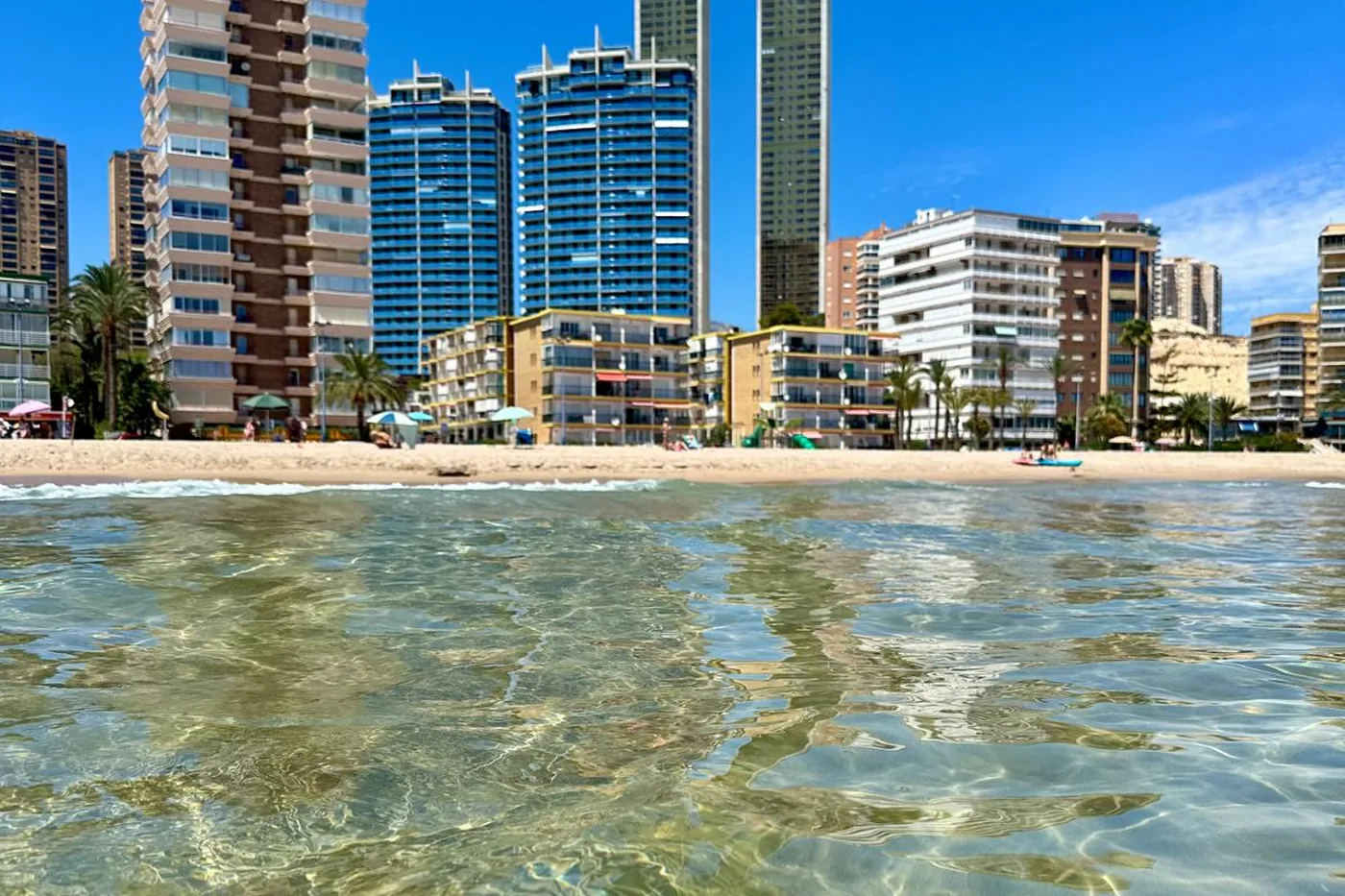
June can still feel sharp on the first morning. July and August are beyond argument. September stays warm because the sea responds slowly to the air, and October, at 22.0°C, is still swimmable even though the mornings have turned.
| Month | Sea | Month | Sea |
|---|---|---|---|
| January | 14.8 | July | 24.8 |
| February | 14.1 | August | 26.2 |
| March | 14.5 | September | 24.8 |
| April | 15.9 | October | 22.0 |
| May | 18.3 | November | 18.9 |
| June | 21.7 | December | 16.3 |
Degrees Celsius. Satellite normals from NOAA OISST for 1991-2020, the same reference period as the AEMET data. The measurement covers open water, so the shore can run a degree warmer in high summer.
Both town beaches hold Blue Flag status, Poniente since 1987. What separates them is the subject of our guide to where to stay in Benidorm.
Does it rain much in Benidorm?
Not much, but unevenly. The year brings 266 mm across fewer than 33 days with measurable rain. September alone delivers 40.7 mm in only 3.2 wet days, roughly 13 mm per rainy day. Autumn rain arrives rarely and heavily, in the pattern known here as gota fría.
Gota fría is cold air moving over a Mediterranean still holding its summer heat, and it can drop a month of water in a few hours. Travelling in September or October, keep a plan B for one day. It will not spoil a week, but the local authorities take the warnings seriously.
The rest of the year is straightforward. From June to August rain amounts to about one day a month, and in July to half a day.
When are flights to Benidorm cheapest from the UK?
January is the cheapest month on UK routes to Alicante, which is the airport you fly into: Benidorm has none of its own, and the drive is roughly 58 km. Fares move daily, so read this as the shape of the year rather than a quoted price.
The flight is short by holiday standards: 2 hours 25 minutes from Luton, 2 hours 30 from Gatwick, roughly 2 hours 48 from Manchester, about 2 hours 47 from Leeds Bradford, 3 hours 15 from Edinburgh and 2 hours 55 from Dublin.
The route is busy. Ryanair's summer 2026 programme at Alicante covers 89 routes with more than 580 flights a week at peak, adding Aberdeen, Cardiff and Newquay to its UK map and a Cork service for winter 2026/27. Manchester sees roughly 59 departures a week in August, Birmingham around 29. easyJet flies from a long list of UK airports, British Airways from London, Aer Lingus from Dublin.
Fares move daily, so check them close to your dates. What holds is the seasonality: January and the weeks outside the school holidays are cheapest.
Three sensible ways in from the airport:
- The ALSA coach straight from the terminal, 45 to 50 minutes, 9.45 euros for an adult and 6.60 for a child aged 4 to 11, one way.
- TRAM line 1 from Alicante, departures every 30 minutes, slower but with the coastline alongside.
- A taxi, roughly 54 to 70 euros one way, which makes sense with a group or a late arrival.
Is Benidorm warmer in winter than the Canaries or Cyprus?
It is not. The Canaries run 18°C to 24°C through winter and Cyprus around 20°C, against 16.8°C to 17.4°C here in January and February. Where the Costa Blanca wins is access: about 2 hours 30 minutes from London, against four hours or more to the Canaries.
If temperature alone decides it, the Canaries or Cyprus take it and there is no point pretending otherwise. The trade is time in the air: four to four and a half hours from London to the Canaries, four and a half to five to Cyprus, against two and a half to Alicante from a far denser network of UK departure points.
The Algarve is the closest match on paper, with similar winter figures and a flight time to Faro of around 2 hours 40. The difference is exposure: Faro faces the Atlantic and the wind shows it, while Benidorm sits behind the Sierra Helada. Malta lands between the two at just over three hours.
One honest caveat: each of those destinations is measured by a different station over a different reference period, and only the Costa Blanca figures here come from a single official 1991-2020 normal set. On the Costa del Sol the sources contradict each other over which coast is warmer, so we make no claim. What they agree on is that the Costa Blanca is one of the drier stretches of the Spanish coast.
A sea view apartment, whatever the month
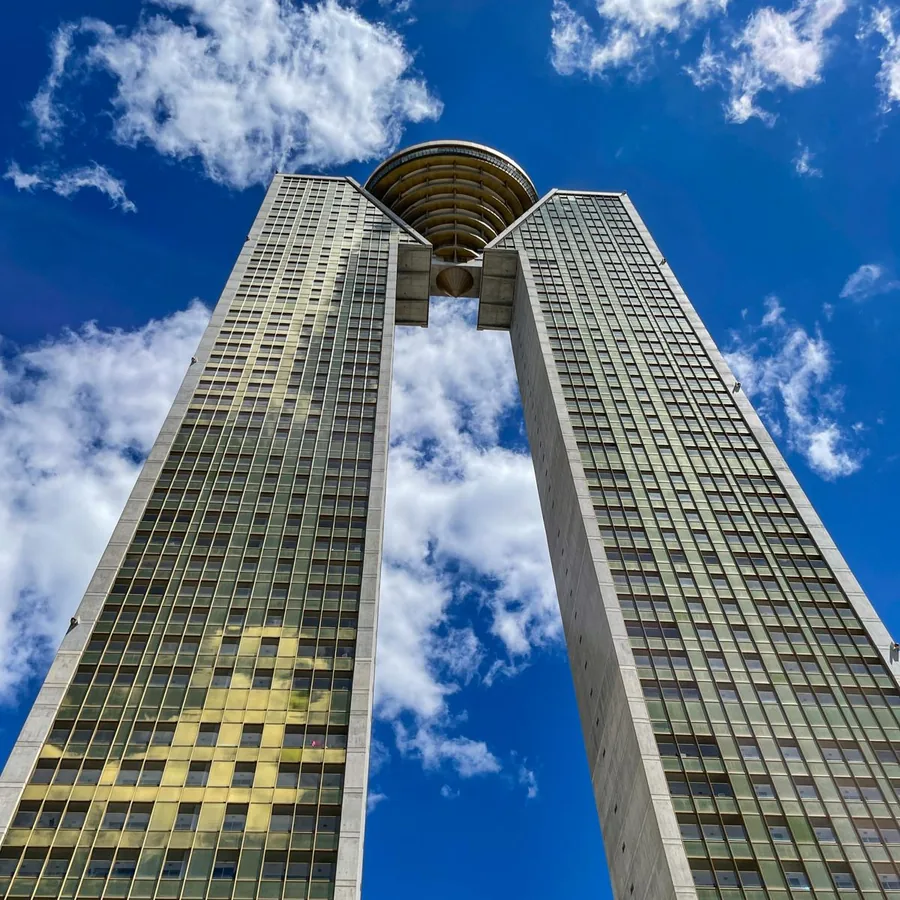
Two bedrooms, a 20 m² terrace and a view across the bay from the Intempo tower, on the quieter Poniente side, with an indoor pool, jacuzzi and sauna in the building. For stays longer than a month we agree the rate with you directly.
Common questions
August. According to AEMET data from the nearest official station, Alicante-Elche, the mean daily maximum in August is 30.8°C and the mean night-time minimum 22.0°C. July is almost identical: 30.2°C by day and 21.3°C at night.
Yes, if you are going for sunshine and walking rather than sea swimming. AEMET data from the nearest official station, Alicante-Elche, puts the January daytime average at 16.8°C with around six hours of sunshine a day. The town runs all year: shops, restaurants and bars stay open, and the calendar of events carries on through the winter.
It does not end the way it does in resorts that close for the winter. The beach season runs from June to October, when the sea sits at 21.7°C or warmer, and peaks in July and August. Outside those months the shops and restaurants stay open, and the patron saint festivals run from the second Saturday of November.
Benidorm has no airport of its own, so you fly to Alicante: about 2 hours 30 minutes from London, roughly 2 hours 48 from Manchester and 3 hours 15 from Edinburgh. Alicante to Benidorm is around 58 km, a 45 to 50 minute coach ride costing 9.45 euros.
Between November and February. That is the quietest stretch of the year on Poniente beach, although the town never empties: a large group of northern European residents spends the winter here, shops and restaurants stay open, and the patron saint festivals fill the second week of November.
Barely. July averages 2.6 mm of rain and half a day with 1 mm or more, August 10.2 mm and about one such day. Rain returns in September and October, and when it comes it tends to arrive all at once.