Benidorm arrives with a reputation attached, and for British visitors it comes from one end of one beach. The town is really three places sharing a bay: Levante, Poniente, and the old town on the headland between them. Which one you book shapes the holiday more than the flat does.
Which part of Benidorm should you stay in?
Levante for nightlife, shops and restaurants within a few minutes' walk. Poniente for a longer, wider and quieter beach with more Spanish holidaymakers and families. The old town, on the headland between the two, for food and atmosphere on a short stay. All three sit in the same bay.
The bay has a simple layout, and it is worth knowing before you book. Benidorm grew around a rocky headland that pushes into the sea. East of it lies Playa de Levante, west of it Playa de Poniente, and on the headland itself sits the old town. The names are literal: levante is Spanish for east, poniente for west.
Both town beaches hold a Blue Flag, so sand and water quality is a draw. The real choice is what you hear through an open window at eleven at night. One term runs through this guide: the British area, meaning the streets in Rincón de Loix where British pubs, karaoke and tribute acts are concentrated.
Is Benidorm really all British pubs and stag dos?
No, but the part that earned the reputation is real. British pubs cluster in Rincón de Loix, on and around Calle Gerona, Lepanto and Mallorca, at the Levante end of the bay. It is a few streets, not the whole town, and the headland separates it from Poniente.
The reputation has a source. An ITV sitcom named after the town ran for years and fixed one version of Benidorm in the British imagination. Plenty of people still arrive expecting Blackpool with better weather.
That version exists. In Rincón de Loix, the district behind the Levante end of the bay, British pubs stand door to door along Calle Gerona, Lepanto and Mallorca, with karaoke and tribute acts most nights. Thousands of people book Benidorm for exactly that and have a very good week.
The point is geography, not taste. That cluster is a few streets at one end of a bay several kilometres across, and that district also has the beach, shops and ordinary restaurants. The old town headland is physically separate from it, and Poniente begins on the far side. Stay west of the headland and the pub strip becomes an evening you choose, not a soundtrack you get by default.
What is the difference between Levante, Poniente and the old town?
Levante is two kilometres of beach, 75 metres wide on average, with the nightlife and the British area behind it. Poniente runs over three kilometres, reaches 105 metres wide and is quieter, with more Spanish visitors. The old town occupies the headland between them and trades sea views for food.
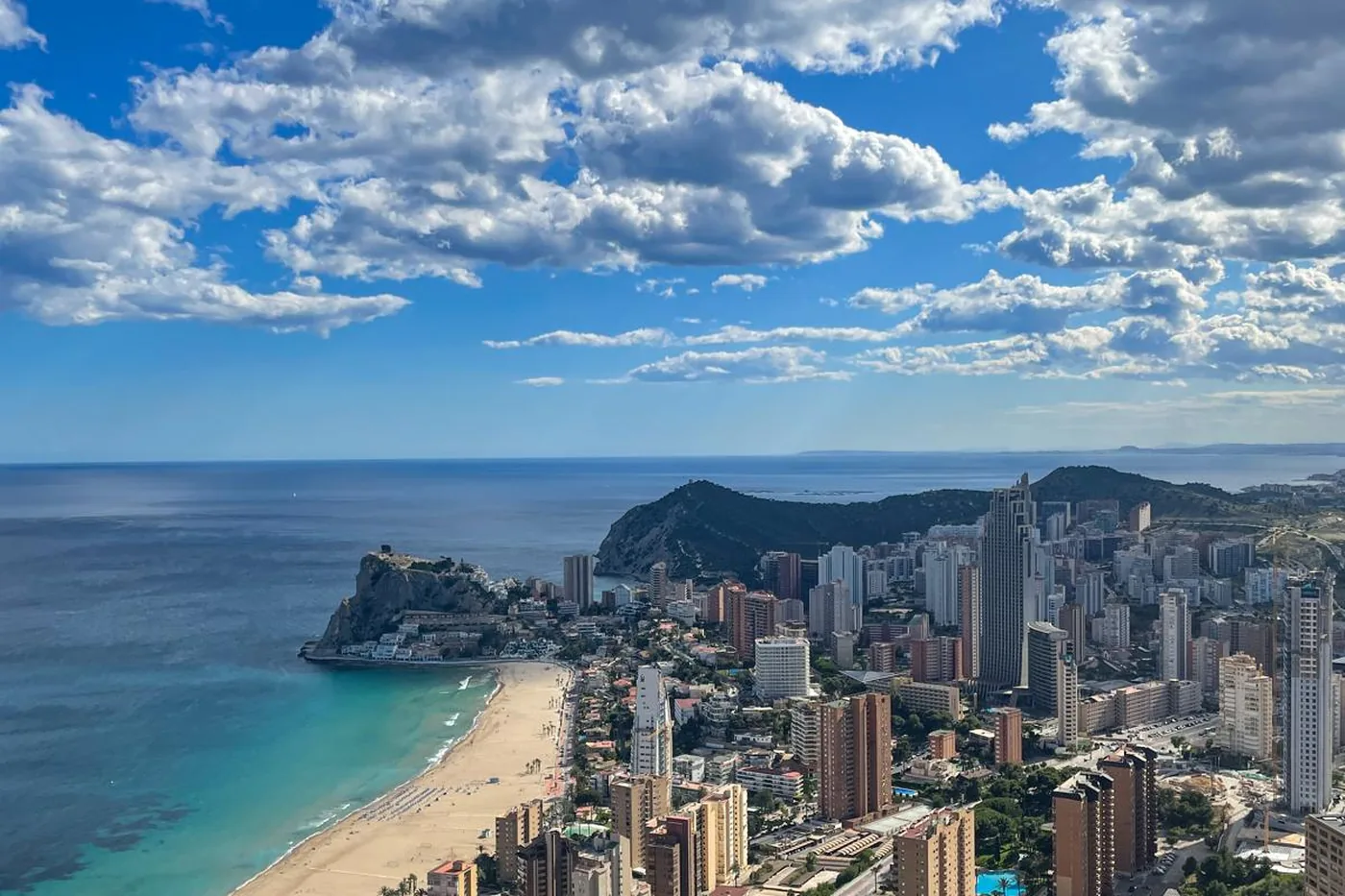
The shortest possible comparison. Beach dimensions come from the official descriptions; the rest is character, not measurement.
| Area | Character | Beach | Suits |
|---|---|---|---|
| Levante | Nightlife, the British area, noise until late | 2 km long, 75 m wide on average, Blue Flag | Younger groups, first visits, everything close |
| Poniente | Calmer, more Spanish visitors and families | Over 3 km long, up to 105 m wide, Blue Flag since 1987 | Families, longer stays, remote work, quiet evenings |
| Old town | Tapas bars, narrow streets, the headland viewpoint | On the headland, both beaches within a walk | Short, food-led stays without a car |
In peak season all three get dearer at once and out of season they all soften. Which months are which is in our guide to the best month to visit Benidorm.
Who should stay on the Levante side?
Anyone who wants bars, restaurants and shops two minutes from the door and does not mind noise after midnight. Levante is two kilometres long, 75 metres wide on average and holds a Blue Flag. The reason to book it and the reason to avoid it are the same reason.
Levante is loud, dense and full of people, and that is the point. The late-opening restaurants, the bars with live music, the clubs and the shops are all here. If your idea of a holiday is leaving the flat with no plan and having a dozen places to choose from two minutes later, Levante does that better than the other two areas together.
The drawbacks follow from the same facts. The beach is narrower than Poniente and over a kilometre shorter, so it gets tight in August. Sound carries between the towers after dark and curtains do not stop it. For an early riser this is the wrong side of town. For anyone planning to come home at two, it is the only one.
What do you get on the Poniente side?
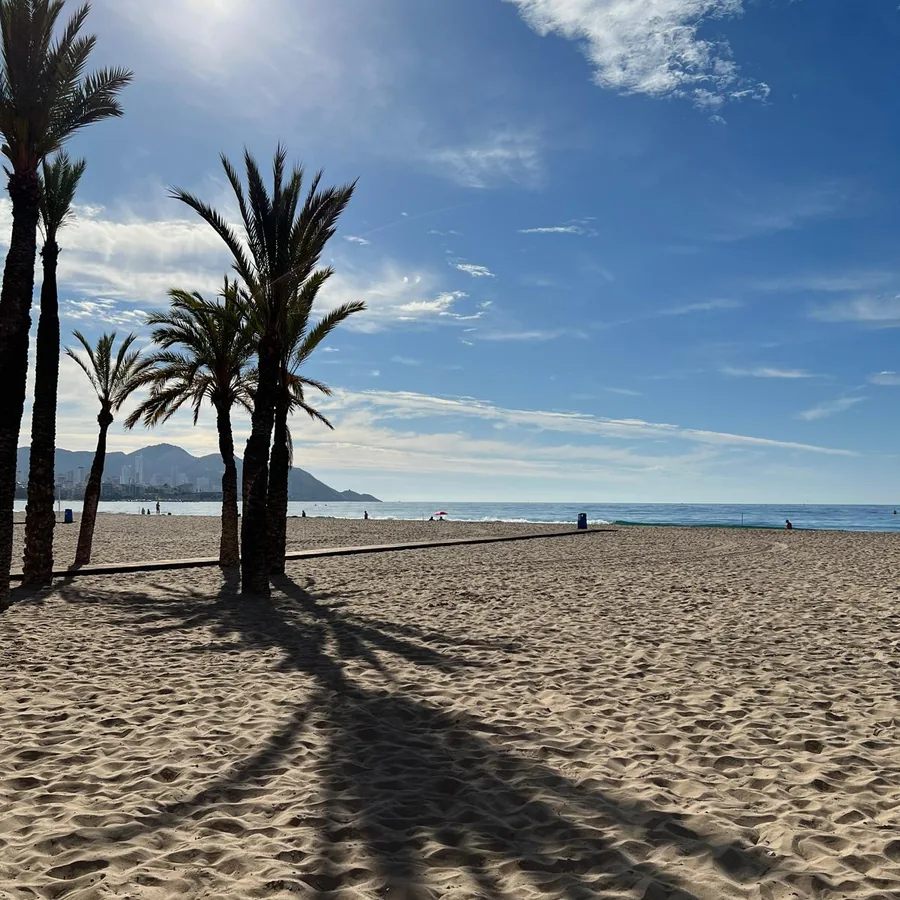
Space and quiet. Poniente runs more than three kilometres, reaches 105 metres at its widest and has held a Blue Flag since 1987. It is calmer than Levante, popular with Spanish holidaymakers, and the whole old town headland stands between it and the British area.
Poniente is the part of Benidorm that never appears in the photographs used to illustrate the party resort. The promenade is wide, the beach is long enough to walk by the water for a quarter of an hour in August without stepping around anyone, and the evening crowd is families and Spanish holidaymakers. With the headland in between, the Levante night stays on its own side of the bay.
The drawbacks are worth naming. There are fewer places to eat, so a spontaneous dinner gives less choice than on Levante. There is effectively no nightlife, and reaching it means a walk across town or a taxi.
Is Benidorm old town a good base?
Yes, if food and atmosphere matter more to you than the view from the window. The old town sits on the headland between Levante and Poniente, so both beaches are a short walk away. You pay for it with evening noise and with flats that rarely face the sea.
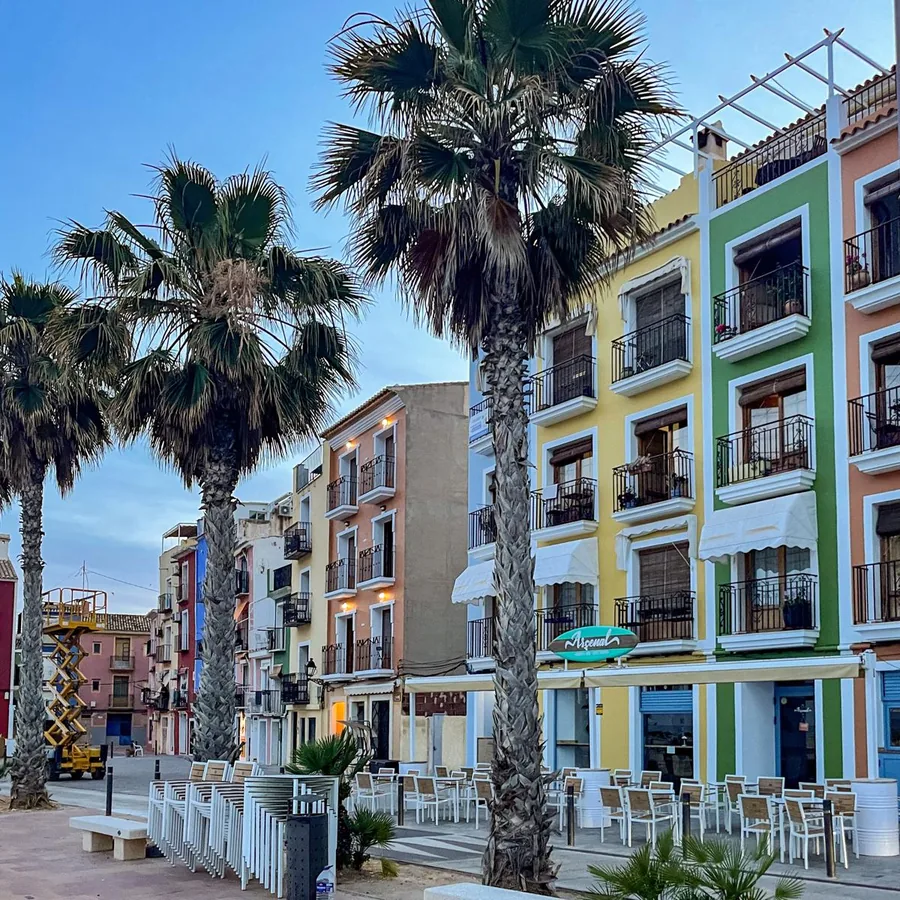
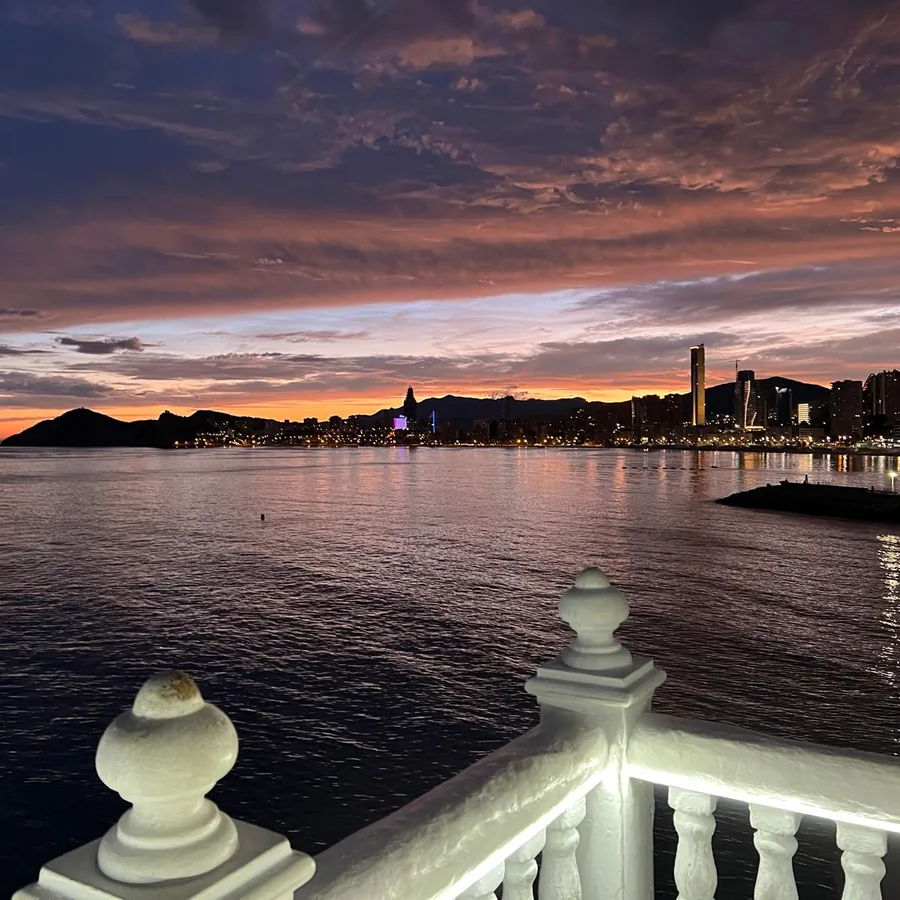
The old town is the part of Benidorm that changes sceptics' minds. It is a tight grid of narrow streets with tapas bars, small shops and squares where families sit out in the evening, and the Balcón del Mediterráneo looks down the coast from the tip of the headland. People who arrive convinced the town is only concrete and pubs tend to revise that after an evening up here.
As a base it has limits worth asking about before you book. A sea view is not standard, and a lift, a pool or a terrace can be rare in older buildings. It is a fine place to spend evenings and the hardest of the three to live in for a fortnight with children.
What is the Intempo tower in Benidorm?
Intempo Sky Resort is the tallest residential building in Spain: 187.1 metres and 49 storeys above ground, on the quieter Poniente side. Two parallel towers joined by a structure at the very top give it an outline you can pick out from anywhere in the bay. Inside there are 256 apartments.
Living high up is nothing unusual in Benidorm. The town has more than 300 high-rise buildings and turns up at the top of most rankings of towers per inhabitant. What sets Intempo apart is the outline: two towers side by side, joined at the very top, visible from the length of the promenade.
For choosing a side, something simpler matters more: Intempo stands west of the headland, so you get the quiet of Poniente and a view across the whole bay, Levante and the old town included.
Which area suits a longer stay?
Poniente. Once a stay runs into weeks the questions change: not how far to the nearest bar, but how quiet the nights are, where you shop, and whether the flat works as a home. Levante and the old town are built for three days rather than three months.
The difference shows up around the second week. On a short trip you put up with anything. Over a longer stay the things that never matter on holiday start to: where you shop, where you cook, whether you can open a window at midnight.
Two practical notes for British visitors. The Schengen rules allow 90 days in any 180-day period, worth planning around before you book anything long; we go through it in the guide to wintering on the Costa Blanca. And if you plan days out to Guadalest, Altea and Villajoyosa, you come back late and tired, and a kitchen and a quiet bedroom matter more than they seem to on paper.
So which side of Benidorm should you book?
Levante if you want nightlife and everything within a couple of minutes. Poniente if you want quiet evenings, a wide beach and room to walk. The old town for a short, food-led stay. For anything longer than a week, or for working remotely, Poniente wins regardless of taste.
- You want nightlife and everything within reach - Levante. Two kilometres of beach, the British area, the biggest choice of bars and restaurants of the three. In return: tighter, busier, loud after dark.
- You want quiet, space and an evening without music from below - Poniente. Over three kilometres of beach, up to 105 metres wide, more Spanish visitors and families.
- You are here for the food and the atmosphere for a few days - the old town. Both beaches within a walk, but rarely a sea view and rarely a quiet night.
- You are staying longer than a week or working remotely - Poniente, preferably high up. Over a long stay, quiet and your own kitchen stop being a comfort and become the condition.
On the quiet side of the bay, high above Poniente
Two bedrooms, a 20 m² terrace and a view across the whole bay from the Intempo tower. The heated indoor pool and the spa area with its sauna are open all year, and for stays over a month we agree a rate individually.
Frequently asked questions
No. The British pub strip is real and it sits in Rincón de Loix, at the Levante end of the bay, on and around Calle Gerona, Lepanto and Mallorca. It is a cluster of streets, not the whole town, and Poniente lies on the far side of the old town headland.
It depends what you came for. Levante is two kilometres long and around 75 metres wide, close to the nightlife and the British area. Poniente runs over three kilometres, reaches 105 metres at its widest and is quieter, with more Spanish holidaymakers. Both hold a Blue Flag.
The Poniente side. The beach there is over three kilometres long and up to 105 metres wide, chosen mostly by Spanish visitors and families, and it sits well away from the British area.
In Rincón de Loix, the district behind the Levante end of the bay, where British pubs stand door to door on and around Calle Gerona, Lepanto and Mallorca. The old town headland is physically separate from it, and Poniente lies on the far side of that headland.
Yes, if food and atmosphere matter more to you than the view. The old town stands on the headland between Levante and Poniente, so both beaches are within a walk. Narrow streets get noisy in the evening, and few flats there face the sea.
Intempo Sky Resort is the tallest residential building in Spain, on the Poniente side of the bay. The Council on Tall Buildings and Urban Habitat lists 187.1 metres of architectural height and 49 storeys above ground.