Ninety is the number that shapes a British winter in Spain. Since Brexit a UK passport holder is a third-country national in the Schengen area, with 90 days in any 180 to spend as a visitor. That single rule decides more about the shape of your winter than the weather does. This guide covers what those 90 days mean in practice, what lies beyond them, and why the Costa Blanca still earns the trip.
Why the Costa Blanca rather than the Canaries, Malta or Cyprus?
It is the best compromise between warmth and reach, not the warmest place on the list. The Canaries and Cyprus both run warmer in January. They are also roughly twice as far: four to five hours in the air from London against two and a half to Alicante, and from far fewer airports.
Every destination on this list is warmer in January than home. The question is what you give up to reach it. Two and a half hours from London, out of more than twenty UK airports, weighs differently when you are going for three months and want the option of a week back home in the middle of it.
| Destination | What it wins on | What it costs you |
|---|---|---|
| Costa Blanca | About 2h30 from London, dense winter flight network, a town you can live in on foot | Not the warmest of the group, and no sea swimming |
| Canary Islands | A genuinely summer-like winter, reported at 18 to 24°C | Four to four and a half hours from London |
| Algarve | Similar climate, similar flight time | More exposed to Atlantic wind |
| Malta | Winter temperatures close to the Costa Blanca | Longer flight, from around 3h15 |
| Cyprus | The warmest and sunniest option after the Canaries | The longest flight from the UK, 4h30 to 5h |
The comparison is qualitative: no single source measures these regions with the same method over the same period. The precise figures below are for the station nearest Benidorm.
So the Costa Blanca does not win on temperature. It wins on the sum: enough warmth, short flights all winter, a compact town, and a hospital with an international department inside it.
How warm is Benidorm in winter?
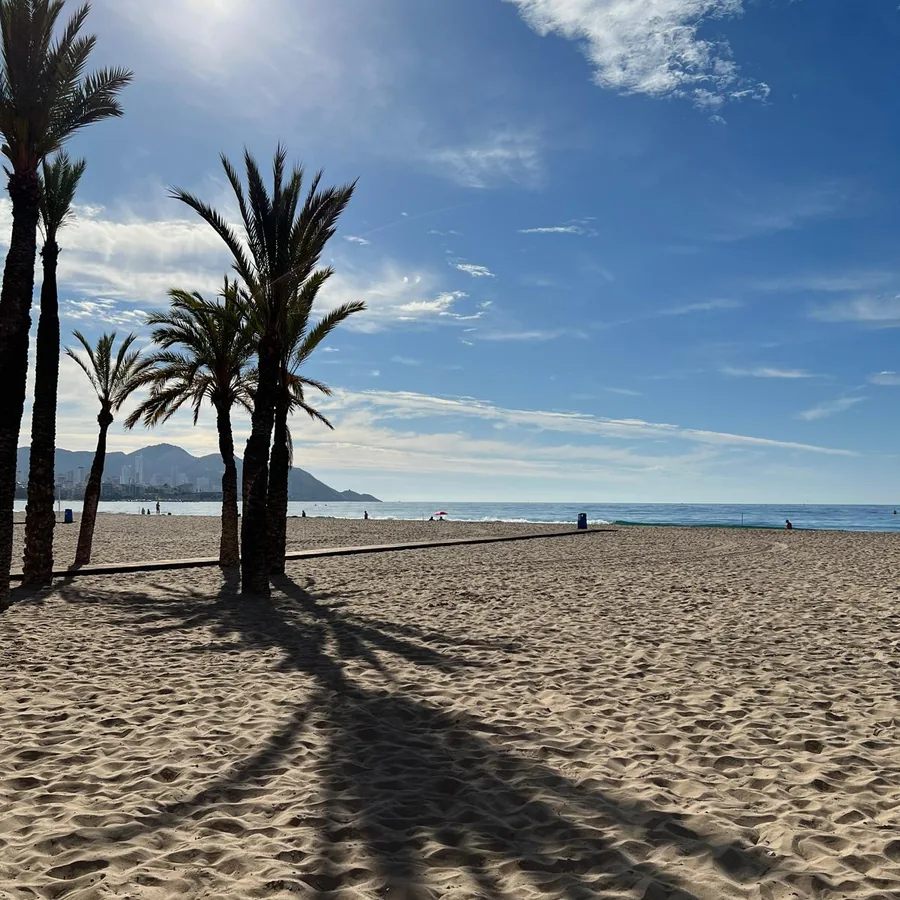
Mild rather than hot. The 1991-2020 normals for the nearest official station put January at 16.8°C by day and 6.7°C at night, and February at 17.4°C and 7.1°C, with six to six and a half hours of sunshine a day. The sea sits at 14.8°C, which is walking weather.
Those figures are the official AEMET climate normals for 1991-2020: thirty-year averages from instruments, not a forecast. The nearest station sits about 50 kilometres south, and Benidorm, sheltered from the north by the Serra Gelada ridge, tends to run a shade milder in winter.
The sea sets the honest limit. Satellite normals for open water near Benidorm give 14.8°C in January and 14.1°C in February, which is walking weather rather than swimming weather. The full month-by-month table sits in our guide to the best month to visit Benidorm. Source: AEMET OpenData.
How long can a British passport holder stay in Spain?
Ninety days in any 180-day period, across the whole Schengen area rather than per country. Any days you spent in Schengen during the preceding 180 count towards the total. Your passport must have been issued less than ten years before entry and remain valid for three months after you leave.
The window rolls. At a border check the officer looks back 180 days from that day and adds up the days you spent inside the area, so a fortnight in France in September takes a fortnight off a winter running from January to March. If you hold an Irish passport none of this applies to you: as an EU citizen you are outside the 90-day limit entirely.
What it means in practice is simple. A three-month winter fits. A six-month one does not, at least not on a visitor stamp. And overstaying is not a paperwork slip: gov.uk warns of a ban from the Schengen area of up to three years. Source: gov.uk, entry requirements for Spain.
What changed at the border with the EES?
The Entry/Exit System replaced passport stamping. The European Commission states that it became fully operational on 10 April 2026 across the countries using it. On your first crossing you register a facial image and fingerprints, the record lasts three years, and the system counts your days for you.
Until this year you counted your own days from the stamps in your passport. Now the record is digital, entries and exits are logged, and an overstay surfaces automatically rather than depending on an officer leafing through pages. The practical consequences are small but real: allow extra time at the border, particularly on a first crossing, when the biometrics are taken.
Some travel guidance still describes the system as being introduced. That was accurate during the rollout, which began in October 2025, and stopped being accurate in April 2026. A separate travel authorisation, ETIAS, has been announced and is not yet in force. We are not printing a start date for it, because the date has moved before. Source: European Commission, Entry/Exit System.
Does owning a property in Spain let you stay longer?
Owning a flat in Spain does not extend your stay by a single day. Without a visa, an owner is a visitor like everybody else and is held to the same 90 days in 180. The residency-by-investment route known as the golden visa closed on 3 April 2025.
The belief has a history behind it. Until that date an investment of 500,000 euros in Spanish property did open a residence route, and the scheme was marketed widely enough to outlive its own repeal. What remains is narrower and worth knowing: a property can support a non-lucrative visa application as evidence of ties to Spain, but it is one document in a file, never a substitute for the application.
Our sources here are legal and property press rather than the statute book itself, so treat the detail as a pointer and confirm the current position with a Spanish consulate.
Which visa covers a whole winter in Spain?
Two national long-stay visas, both type D. The visado de residencia no lucrativa, the non-lucrative visa, is for people living off their own means and does not permit work. The visado para teletrabajadores, the digital nomad visa, is for remote work for employers or clients based outside Spain.
| Route | Who it fits | What it does not do |
|---|---|---|
| Visitor, no visa | Stays of up to 90 days in any 180 | Cannot be extended by owning property |
| Non-lucrative visa | Living on a pension, savings or investments | Does not permit work |
| Digital nomad visa | Remote work for employers or clients outside Spain | Not designed for work mainly for Spanish clients |
Both are applied for in person, at the Spanish consulate covering where you live, and both want the same core file: a valid passport, the EX-01 form, a criminal record certificate covering the last five years, private health insurance and proof of income. The thresholds are the part that moves. The non-lucrative visa is pegged to IPREM, a Spanish public income index, and was reported in 2026 at around 28,800 euros a year for the main applicant plus 7,200 euros for each additional family member. The digital nomad visa is pegged to the Spanish minimum wage and reported at around 2,849 euros a month. Both figures come from immigration practitioners rather than from a consulate page, and both reset annually.
Position as of August 2026, not legal or tax advice. Requirements change and consulates differ, so confirm with the Spanish consulate and gov.uk before you commit to dates.
What happens with healthcare and the GHIC?
The UK Global Health Insurance Card covers state healthcare in Spain that cannot reasonably wait until you are home, on the same terms as a Spanish resident. It does not cover private clinics or a medical flight back, and the NHS advises holding travel insurance alongside it.
What the card leaves out matters more than what it includes. Private clinics sit outside it, so does repatriation, and treatments such as dialysis or chemotherapy have to be arranged with a local provider in advance. The NHS says plainly that the card is not a replacement for travel insurance.
For a stay past 90 days the card does not answer the visa question either. Long-stay applications ask for full private cover meeting Spanish criteria, which the GHIC is not, and that is our reading of two separate requirements rather than a line quoted from either. Locally, Hospital Clínica Benidorm runs an international department, and larger private hospitals in Alicante are a short drive down the coast. Source: NHS, applying for a GHIC.
Can you work remotely from Benidorm?
The town, yes. The specific flat is what to check. Fibre is standard here and reported cafe speeds start around 100 Mbps, but a large share of holiday apartments are furnished for a week off rather than for eight-hour days: no desk, and no chair you would sit in until six.
Before committing to months, check four things in the flat itself: a desk and a chair with a back, a room you can shut, what the light does during working hours, and the real line speed rather than the advertised one. The connection figures above come from a single local guide rather than an independent measurement, so treat them as an indication.
The legal side is separate from the technical one. Working remotely during a visit is one matter; beyond 90 days, the digital nomad visa is the route built for it, on the condition that your work is for employers or clients outside Spain.
What does a winter in Benidorm cost?
Rent is the item that swings the total, and it is the one that varies most by street and season. Local sources put groceries at roughly 180 to 250 euros a month per person and a meal out at 10 to 18 euros. Most other figures online cover Spain as a whole rather than Benidorm.
Rent is where the range opens up. Winter lets on the Costa Blanca are advertised from around 380 euros a month, and furnished one-bedroom flats in the town are quoted at roughly 650 to 900 euros. Those are the lower and middle shelves of the local market, a different segment from a two-bedroom apartment with a terrace, a sea view and a heated pool, spa and gym open through the winter. We quote them to show the spread of the market, not as a reference point for our own rate.
Two honest notes on the numbers. They come from local listings and a single local cost-of-living guide, all in euros, because that is how this market quotes; what they cost in pounds depends on the rate on the day you transfer. And a winter abroad does not automatically save money. Flights, insurance and the home you leave standing behind you all stay on the balance sheet.
Are there flights to Alicante out of season?
Yes, right through the winter. Alicante-Elche runs more than 200 routes in the winter season. The flight is about two and a half hours from London, roughly two hours 48 minutes from Manchester, three hours 15 from Edinburgh and two hours 55 from Dublin.
Alicante is the airport for Benidorm, and it does not wind down in November. Ryanair, easyJet, British Airways and Aer Lingus all serve it from Britain and Ireland, and Ryanair's own summer 2026 announcement lists 89 routes at Alicante, which gives a sense of how deep the network is. Trade press reported a new Cork to Alicante route in the winter 2026/27 schedule.
On fares we will only repeat what the airlines publish themselves: January is consistently the cheapest month to fly. Quoting an actual figure would be out of date by the time you read this. From the airport it is about 58 kilometres to Benidorm. The coach takes 45 to 50 minutes at 9.45 euros for an adult and 6.60 euros for a child aged 4 to 11, tram line 1 runs every half hour, and a taxi costs roughly 54 to 70 euros.
Who does a winter here suit, and who does it not?
It suits retired couples who want daylight and a walkable town, remote workers with the paperwork settled, and anyone testing Spain before a bigger decision. It suits you less if you came to swim in the sea, or if what you want is somewhere small and quiet.
Three months is long enough to see February here, not only July, which is the whole point for anyone weighing up a move. It is also long enough for the ordinary things to matter more than the view: whether the chemist, the doctor and the shop are within walking distance, and whether the promenade gives you a flat walk every morning. Benidorm is unusually good at that part.
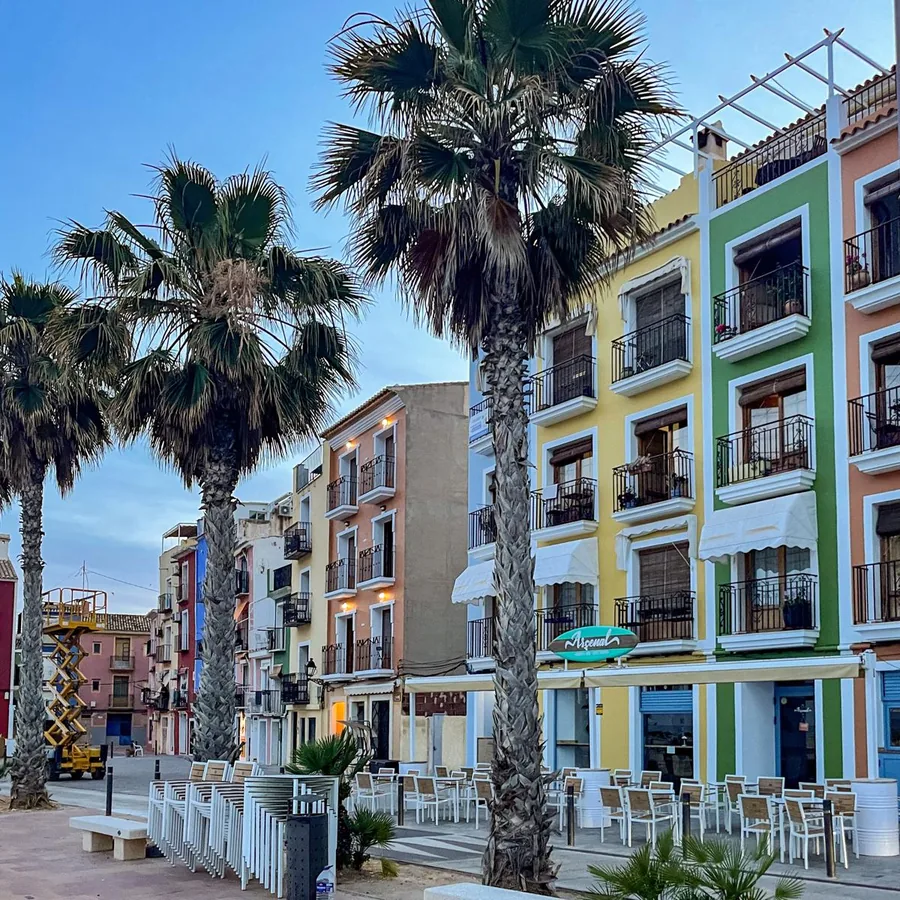
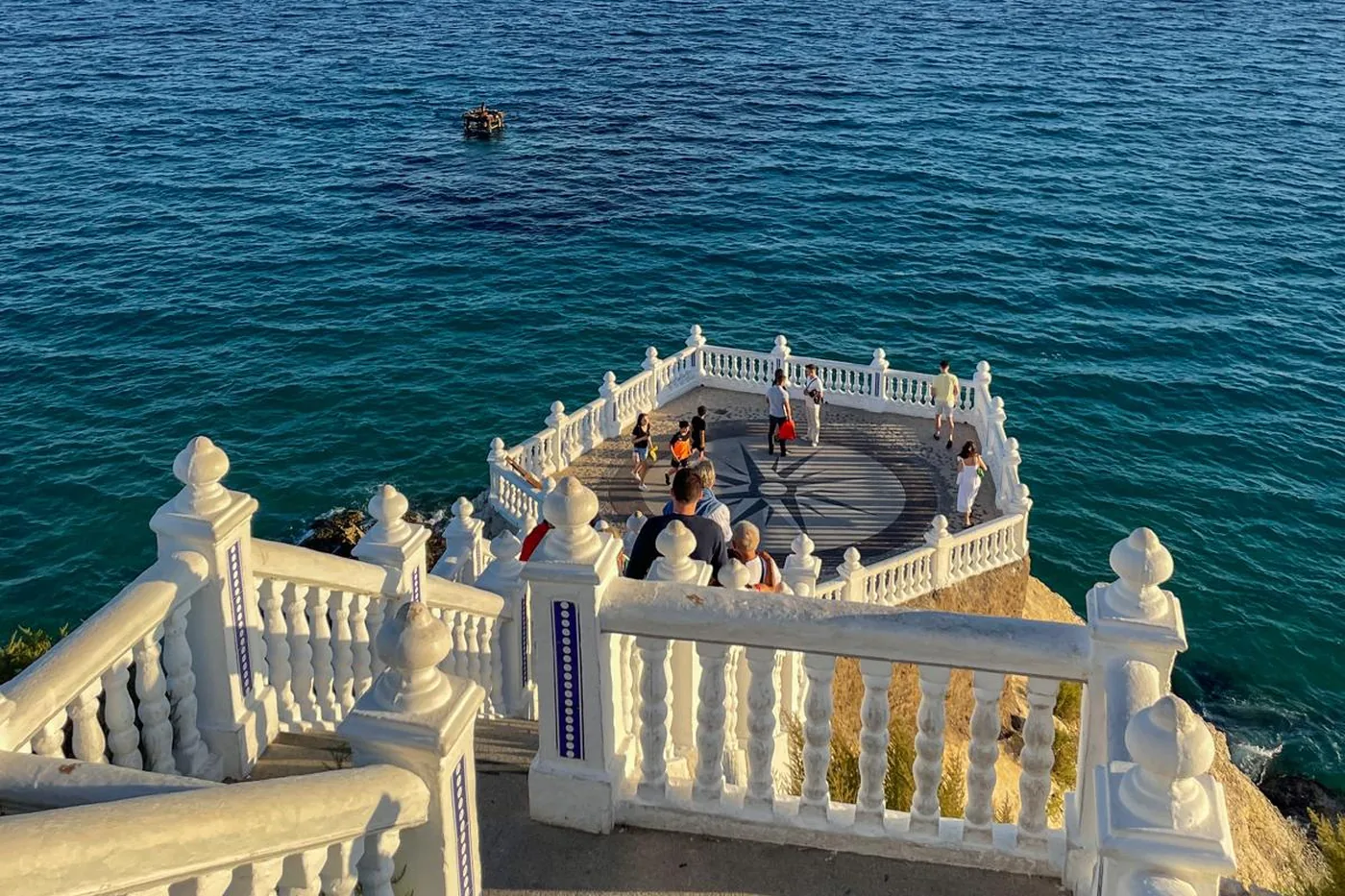
The assumption is worth naming too, because it decides a lot of trips. The idea that the town is one long strip of British bars comes largely from a decade of television. That strip is real, at the Rincon de Loix end behind Levante beach, and it is a cluster of streets at the opposite end of the bay from Poniente. The old town between the two beaches is a different place again. Where you sleep decides which Benidorm you get, which is the subject of our guide to Poniente and Levante. Winter also flatters the inland trips: Guadalest, Altea and Villajoyosa are better at 17°C than at 31°C.
The other thing people expect of a resort in winter, and do not get here, is a town with its shutters down. Shops, restaurants and bars stay open, and the civic calendar carries on. The patron saint festivals run from the second Saturday of November to the following Wednesday: the town re-enacts the finding of its Virgin among the wreckage of a ship on Poniente beach, a flower offering winds through the streets, and fireworks close the week. If you want the Spanish Benidorm rather than the televised one, that is the week to book. February brings Benidorm Fest, the song contest Spain's national broadcaster has staged here since 2022, and Christmas and New Year are marked in the same spirit.
A winter with the bay in front of you
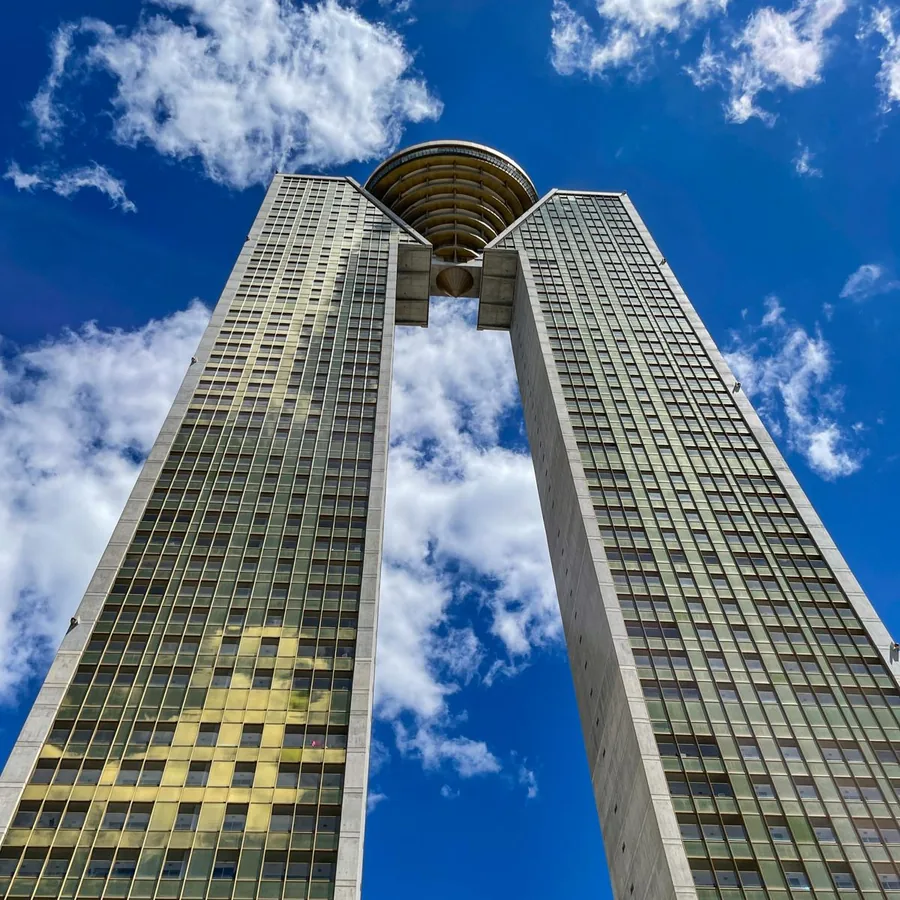
Out of season we let the apartment for 3 to 9 months, from October onwards. Two bedrooms, a 20 m² terrace and a view across the bay from the Intempo tower, on the quieter Poniente side. The heated pool, the spa area with its sauna and the gym run all year, and we agree the rate for longer stays with you directly. Three months fits inside a visitor stay; beyond that it comes down to your paperwork.
Common questions
Ninety days in any 180-day period, and the limit covers the whole Schengen area rather than Spain alone. Days spent anywhere in Schengen during the preceding 180 count towards the total. Overstaying risks a ban of up to three years, according to gov.uk. Irish passport holders are not affected.
If the stay runs past 90 days inside a 180-day window, yes. The two usual routes are the non-lucrative visa, for people living off their own means, and the digital nomad visa, for remote work for employers outside Spain. Both are applied for at a Spanish consulate before you travel.
No. Owning a flat adds nothing to what your passport allows, and the residency-by-investment route known as the golden visa closed on 3 April 2025. A property can support a non-lucrative visa application as evidence of ties to Spain, but it never replaces the application itself.
Mild rather than hot. At Alicante-Elche, the nearest official station, about 50 km away, the 1991-2020 normals give January 16.8°C by day and 6.7°C at night, and February 17.4°C and 7.1°C, with around six hours of sunshine a day. The sea is too cold for swimming.
It covers state healthcare that cannot reasonably wait until you return to the UK, on the same terms as a Spanish resident. It does not cover private clinics or a flight home, and the NHS advises holding travel insurance as well. Long-stay visa applications ask for separate private cover.
Yes. Alicante-Elche runs more than 200 routes through the winter season. The flight takes about two and a half hours from London, roughly two hours 48 minutes from Manchester, three hours 15 from Edinburgh and two hours 55 from Dublin. January is usually the cheapest month to fly.